Executive Summary: Occupational Cancer Trends Among Canadian Firefighters: Implications for Health, Safety, and Governance

Occupational Cancer Trends Among Canadian Firefighters: Implications for Health, Safety, and Governance

Executive Summary Report 

Introduction

This article is based on a peer-reviewed publication in the journal Injury Epidemiology, published online by Springer Nature on December 17, 2025. The study provides the most comprehensive national analysis to date of firefighter injury and fatality claims in Canada between 2007 and 2021.

Canadian firefighters know the risks of the job extend far beyond the fireground. Recent national data on injury and fatality claims show that cancer, traumatic injuries, and mental health disorders are reshaping the health profile of our profession. Between 2007 and 2021, more than 29,000 accepted claims were reported across Canada, underscoring firefighting as one of the most hazardous occupations in the country.

The Reality of Injury and Fatality in Canada’s Fire Service

Between 2007 and 2021, Canadian firefighters submitted 1,509 fatality claims and 27,990 time-loss injury claims.

Fatalities were dominated by cancer, accounting for 84.6% of firefighter deaths, with a fatality rate of nearly 994 per 100,000 firefighters per year. Cardiovascular disease (CVD) and traumatic incidents followed as secondary contributors.

Time-loss injuries were overwhelmingly traumatic in nature, representing 80.6% of claims at a rate of 17,859 per 100,000 firefighters per year. Musculoskeletal strains, sprains, and overexertion injuries were particularly prevalent.

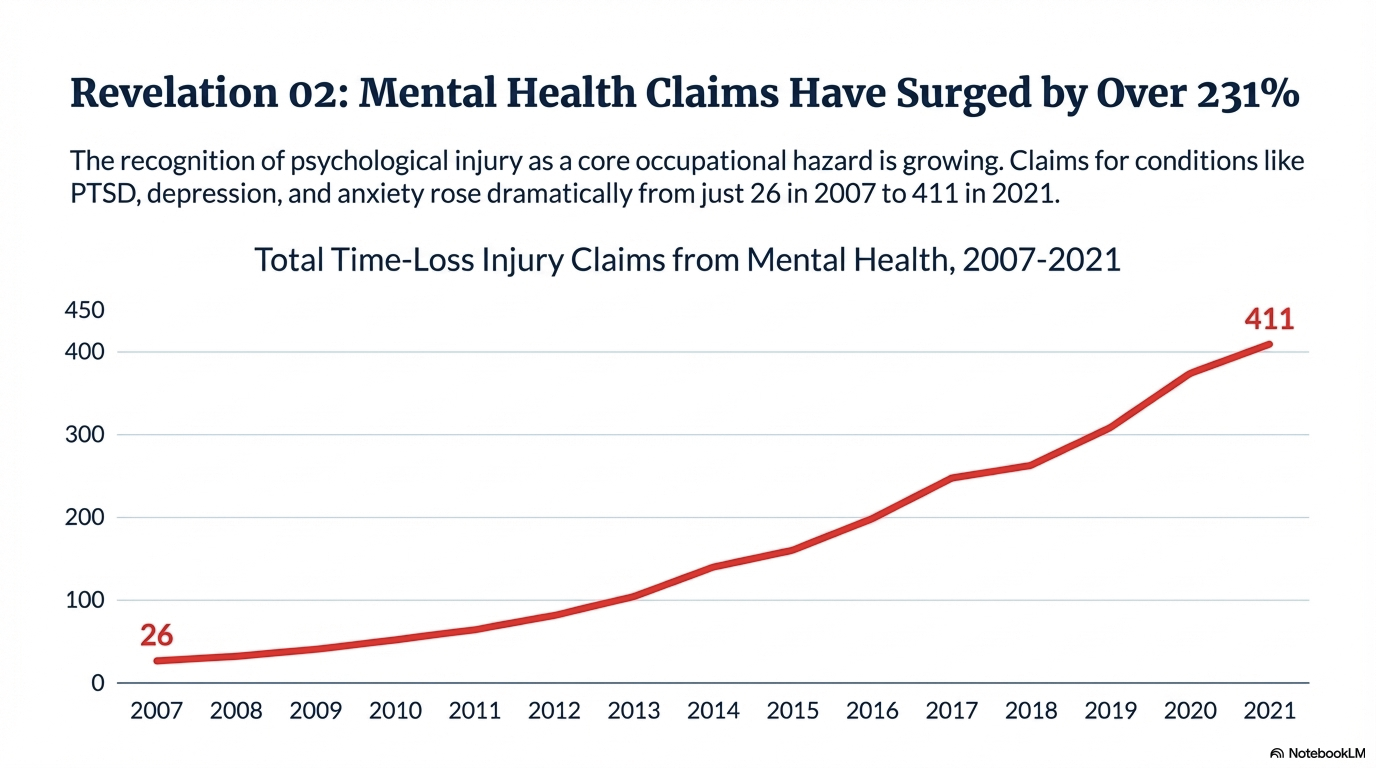
Mental health claims rose sharply, increasing by 231% over the study period, reflecting the growing toll of post-traumatic stress disorder (PTSD), depression, and burnout.

These findings confirm what many in the fire service already know: the health reality of firefighting is shifting from acute trauma toward chronic disease and psychological stress.

Demographic and Provincial Trends

Fatality claims were most common among firefighters aged 65 and over, reflecting the long-term latency of cancer and cardiovascular disease. Time-loss injuries peaked among those aged 30–49, the prime working years of the profession.

Men accounted for 99.4% of fatality claims and 92.2% of injury claims, reflecting the male-dominated composition of Canada’s fire service.

Ontario reported the highest incidence, with 47.3% of fatalities and 30.7% of injuries, followed by Quebec, British Columbia, and Alberta. These provinces represent the largest firefighter populations and the most complex fire environments, from dense urban centres to expansive wildland interfaces.

Cancer: The Leading Cause of Firefighter Fatalities

Cancer continues to stand out as the most significant occupational health threat for Canadian firefighters. More than four out of five fatality claims between 2007 and 2021 were cancer-related. This reflects decades of exposure to toxic combustion products, flame retardants, and hazardous chemicals embedded in firefighting gear.

The latency of cancer means that many firefighters only experience its impact late in their careers, with the majority of fatality claims occurring among those aged 65 and older. Yet the data also show that 14 firefighters aged 25–29 died from occupational causes during the study period, representing nearly 1% of all fatalities. This finding underscores that cancer and other occupational diseases are not confined to retirement years — they can affect firefighters much earlier in their careers.

What makes this picture even more concerning is evidence from prior research showing that only 14% of firefighters had undergone cancer screening in the three years before the study cohort was assessed. This statistic underscores a critical gap: while firefighters face elevated exposure risks, they are not consistently accessing preventive health monitoring. The result is late detection, poorer outcomes, and higher fatality rates.

For the firefighting community, the message is clear. Cancer prevention is not only about reducing exposure on the fireground through decontamination protocols and safer gear — it is also about embedding routine screening and health surveillance from the earliest stages of a firefighter’s career. Screening should be treated with the same seriousness as fitness testing or PPE checks. Administration  and unions have a role to play in advocating for funded, accessible screening programs, while departments can lead education campaigns that normalize early detection.

By combining exposure reduction with proactive health monitoring, the fire service can begin to shift the trajectory of cancer outcomes. This is not simply a medical issue — it is a governance and operational priority that directly affects firefighter longevity, workforce sustainability, and community trust.

Cardiovascular Disease: A Silent Killer

Sudden cardiac arrest remains a leading cause of firefighter fatalities during emergency response in North America. Canadian data mirror this global trend.

Firefighters are significantly more likely to die from CVD during emergency response compared to non-emergency duties. Risk factors include obesity, hypertension, diabetes, and musculoskeletal disorders—all prevalent within the firefighter population.

Operational planning must therefore integrate cardiovascular screening, fitness programs, and fatigue management policies into fire service governance. Addressing cardiovascular risk is as much about organizational culture as it is about individual health.

Mental Health: The Rising Tide

The sharp increase in mental health claims—rising from 26 in 2007 to 411 in 2021—signals a cultural and operational shift. PTSD, depression, anxiety, and substance abuse are increasingly recognized as occupational hazards.

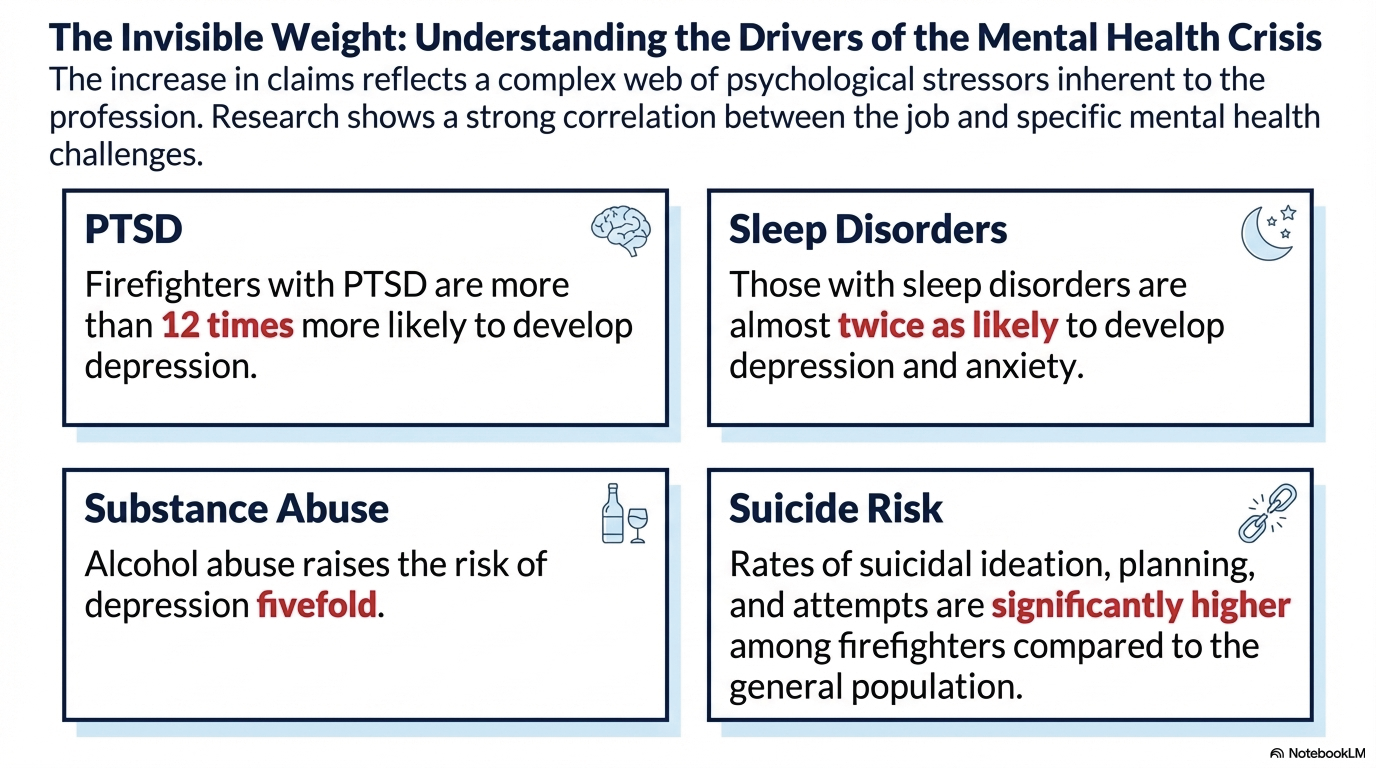
Firefighters with sleep disorders are almost twice as likely to develop depression and anxiety. PTSD increases the odds of depression more than twelvefold, while alcohol abuse raises risk fivefold. Rates of suicidal ideation and attempts are significantly higher among firefighters compared to the general population.

For the firefighting community, this trend demands comprehensive mental health strategies, including peer support programs, confidential counselling, and proactive monitoring. The stigma surrounding psychological injury must be dismantled to ensure firefighters receive timely care.
Operational and Governance Implications

The epidemiological findings carry direct implications for Canadian fire governance and administrative  decision-making.

Cancer and cardiovascular screening protocols, integrated mental health assessments, musculoskeletal injury prevention, enhanced decontamination protocols, and harmonized compensation processes are all critical steps.

Building Sustainable Firefighter Health Programs

The findings from 2007–2021 highlight the urgent need for sustainable, evidence-based health programs that empower firefighters and reassure administration of long-term governance accountability.

Community empowerment, national standards, and administrative engagement are all critical. By reframing firefighter health as a governance priority, administration can ensure that occupational risks are mitigated, workforce sustainability is preserved, and public trust in fire services is strengthened.

Strategic Approaches for Firefighter Health and Safety

For the firefighting community, advancing towards a healthier future demands a commitment to evidence-based governance, the implementation of proactive health surveillance, and the establishment of sustainable safety programs. These strategies should be grounded in ongoing research and data to ensure that interventions remain relevant and effective over time.

Investing in firefighter health is not only a matter of supporting those who serve but also a strategic decision for the long-term resilience of Canadian fire services. By prioritizing these investments today, Canada stands to cultivate a fire service that is robust, adaptable, and fully capable of safeguarding communities in the years ahead.

Furthermore, those who finance and support these programs will ultimately realize substantial benefits. Reduced costs associated with preventable injuries, illnesses, and other health-related setbacks will result in a more sustainable allocation of resources, ensuring that both operational efficiency and fiscal responsibility are achieved.

Conclusion

The evidence is clear: Canadian firefighters face a dual challenge of acute traumatic injury and chronic disease, with cancer, cardiovascular illness, and mental health disorders leading the charge. These risks translate into thousands of claims, hundreds of fatalities, and immeasurable impacts on families, communities, and fire services. 

Len Garis is Fire Chief (ret) for the city of Surrey, B.C., Research Associate – University of the Fraser Valley, associate scientist emeritus with the B.C. Injury Research and Prevention Unit. Contact him at lwgaris@outlook.com. 

Todd Schierling is the president of the BC Professional Firefighters Association, a captain with the Surrey Fire Services and an IAFF 6th District field service representative. Contact him at president@bcpffa.org.

Reference

Al-Hajj, S., Thomas, L., Garis, L., El-Asmar, K., El-Hajj, F., & Pike, I. (2025). Occupational injury among firefighters in Canada: a trends analysis of fatality and time-loss injury claims (2007–2021). Injury Epidemiology, 12:85. Published online December 17, 2025. Springer Nature. 

Review the full article here https://doi.org/10.1186/s40621-025-00639-0
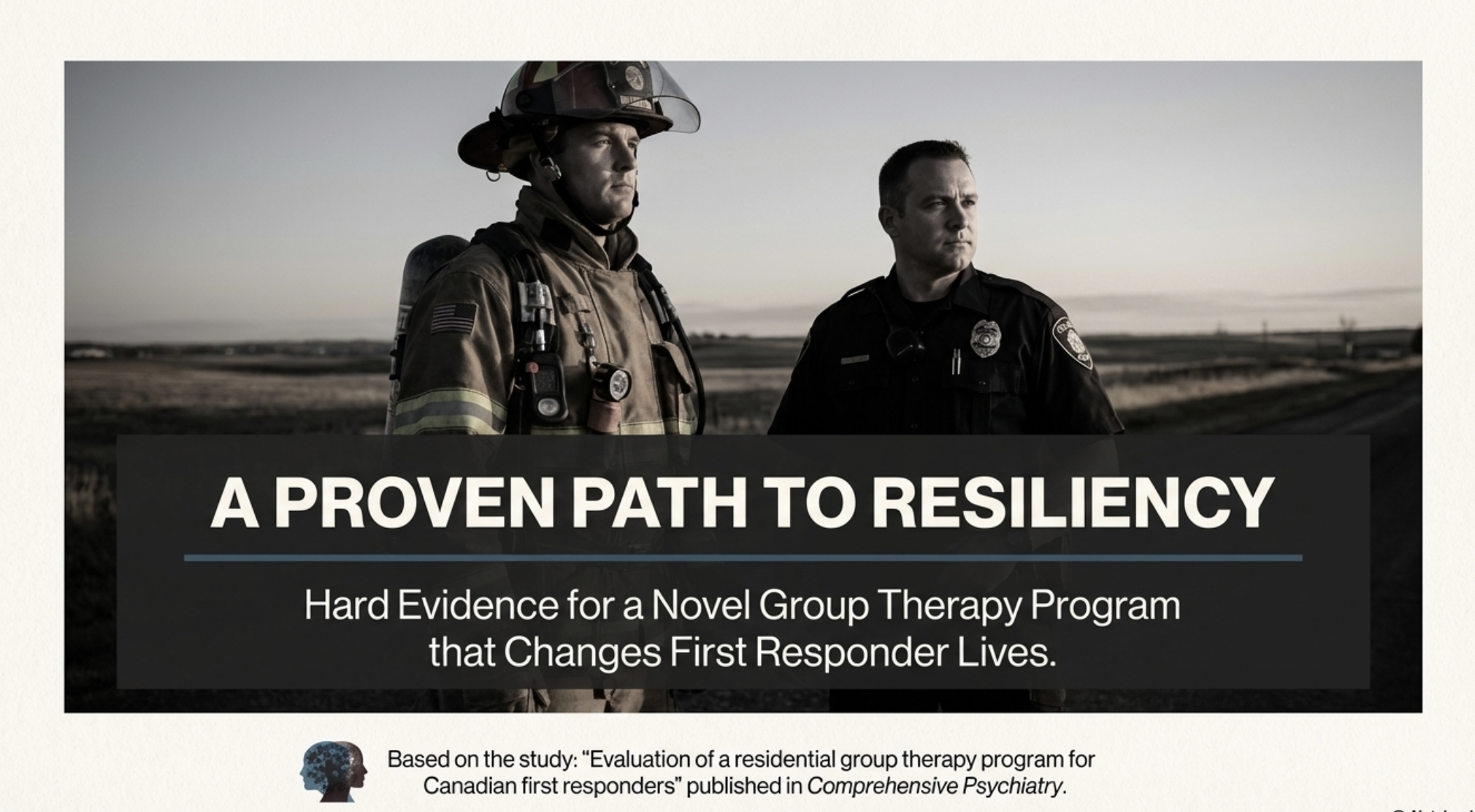
Executive Summary: Evaluation of the First Responder Resiliency Program (FRRP)

Executive Summary Report

This report summarizes a clinical study published in Comprehensive Psychiatry evaluating the First Responder Resiliency Program (FRRP). The study monitored 220 Canadian first responders—including 114 firefighters—to determine the program’s efficacy in mitigating occupational stress and enhancing quality of life.

Background and Evolution

The FRRP’s initial implementation and research were made possible by a two-year grant from Movember. This funding covered 28 sessions conducted between 2021 and 2024.

Following the successful grant period, the program transitioned to a sustainable user-pay model. It is now collectively administered by:

  • BC Professional Fire Fighters’ Association (BCPFFA)

  • BC Police Association

  • Blueprint.ngo

Participation included IAFF members from across Canada.

Key Study Results

The evaluation revealed significant, enduring improvements across all primary psychological markers, with data collected at baseline, two weeks post-program, and at a six-month follow-up.


  • Clinically Significant Symptom Reduction: Participants showed "large" to "medium-large" decreases in symptoms of Major Depressive Disorder (MDD), Generalized Anxiety Disorder (GAD), and PTSD.

  • Successful Return to Work: 60% of participants who were on medical leave at the start of the program successfully returned to active duty following the intervention.

  • Enhanced Quality of Life: Members reported substantial gains in life satisfaction and their ability to navigate social and professional roles.

  • Long-Term Stability: Unlike many short-term mental health interventions, the positive gains recorded immediately after the program remained stable at the six-month mark.


Social Return on Investment (SROI)

The FRRP demonstrated exceptional value relative to its funding. According to the University of Canberra FRRP Evaluation Report (2024): 

  • Direct Impact: For every $1 USD invested by Movember, the program generated $5.48 USD in social value.

  • Efficiency: This represents a 448% social return, which remains high even when accounting for additional in-kind and operational costs.

Source: BluePrint FRRP Summary Participant Outcomes & University of Canberra, FRRP Evaluation Report 2024

Conclusion: A Proven Framework for Resiliency

The Movember-funded grant period provided the rigorous clinical environment necessary to confirm a vital truth: the FRRP works. By delivering measurable, long-term relief from occupational stress and facilitating a successful return to work for a majority of participants, the program has moved beyond a "pilot" phase and is now a proven clinical standard.

In addition, the unanimous adoption of NR12 Resolution: Health and Wellbeing of BC’s Public Safety Personnel (submitted by North Vancouver City) at the Union of BC Municipalities in September 2025 underscores the urgent need for this intervention. With local governments now calling on the Provincial Government to commit $3M in funding, the evidence is clear that the FRRP is not just a health necessity, but a high-value investment in the safety of our communities.

As we transition to our current administrative model, we urge our affiliates to leverage these findings. This data provides the foundation to advocate for the permanent integration of the FRRP into our members' health and wellness benefits, ensuring that those who protect our province have the evidence-based support they deserve.

Dr. Duncan Shields, Adjunct Professor - Faculty of Medicine, University of British Columbia, Blueprint - Military and First Responder Resiliency Projects  Co-founder, Blueprint., Dr. Duncan Shields, R.Psych.

Todd Schierling, President, BC Professional Fire Fighters’ Association; Captain with Surrey Fire Services; IAFF 6th District Representative.


Reference: 

Duncan M Shields, Jan Klimas, Theo Niyonsenga, Kevin Lutz, Aynsley J. Wong, David Kuhl, Faculty of Medicine, University of British Columbia, 3rd floor David Strangway Building, 5950 University Blvd, Vancouver, BC V6T 2A1, Canada Received 30 December 2024, Revised 30 October 2025, Accepted 5 December 2025, Available online 8 December 2025, Version of Record 12 December 2025.

Review Full Article here: sciencedirect.com/science/article/pii/S0010440X25000781 


About FRRP

Since 2017, with the BCPFFA, Blueprint has delivered FRRP to active duty fire fighters across BC and beyond; in 2019, the program was modified in collaboration with the BCPA to deliver resiliency education to law enforcement officers. Together, these organizations represent over 10,000 first responders across the province of BC, and comprise the program’s participant pool. To date, almost 500 first responders have participated in the program. The program is an evidence-informed model created through a unique collaboration between first responder participants, the BCPFFA, BCPA, and Drs. Duncan Shields and David Kuhl from The Blueprint at UBC’s Faculty of Medicine.


UBCM 2025 adopts Resolutions Supporting First Responders

FOR IMMEDIATE RELEASE:

BCPFFA Celebrates Support from Local Government at UBCM 2025 with Endorsements to Enhance First Responder Safety and Protect Public from Building Code Risk 🚒

Thanks to North Vancovuer City’s Councillor Jessica Mcllroy who moved resolution NR12: Health and Wellbeing of BC's Public Safety Personnel. Unanimously supported.

Vancouver, BC – October 13, 2025 – The British Columbia Professional Fire Fighters' Association (BCPFFA) is celebrating the endorsement of two critical public safety resolutions at the 2025 Union of BC Municipalities (UBCM) convention, marking a unified call from local governments for urgent provincial action.

The BCPFFA extends its sincere appreciation to the City of North Vancouver for submitting NR12: Health and Wellbeing of BC's Public Safety Personnel, and to the City of Burnaby for championing NR42: Request to Repeal the Single Exit Stairway Building Code.

Action on First Responder Mental Health (NR12)

NR12 Health and Wellbeing of BC’s Public Safety Personnel Endorsed

Resolution NR12 addresses the escalating crisis of mental health among public safety personnel. Psychological-only injury workplace claims have increased five-fold in British Columbia since 2018, with fire and police personnel suffering from occupational stress injuries at rates four times that of the general population.

The resolution, which the BCPFFA was a key partner in supporting BluePrint, successfully mandates UBCM to ask the Province to take the following steps:

  • Provide two years of funding for the BC First Responder Resiliency Program (FRRP) to ensure continuous support while a longer-term funding model is developed4. The FRRP, which has served over 500 first responders across BC since 2019, has demonstrated positive, evidence-based outcomes lasting at least six months. (Source: BluePrint, UBC)

  • Ask the Ministries of Health, Labour, and Public Safety and Solicitor General to collaborate with FRRP interest holder organizations to develop mental health and wellness policies, regulations, and funding mechanisms for the program’s long-term viability and expansion across the province.


NR12 Health and Wellbeing of BC’s Public Safety Personnel Endorsed

Suspending the Single-Exit Stairway Building Code (NR42)

Resolution NR42 submitted by the City of Burnaby demands immediate suspension of a controversial change to the British Columbia Building Code (BCBC), effective August 27, 2024, which permits the construction of residential multi-family buildings up to six storeys with a single exit stairway under certain conditions.

The BCPFFA, alongside other groups like the Fire Chiefs Association of BC (FCABC) and the BC Police Association (BCPA), has publicly voiced opposition, citing elevated risks to occupant and first responder safety. The resolution urges UBCM to call on the Province to:

  • Suspend the implementation of the single exit stairway provisions in the BC Building Code.

  • Conduct a comprehensive safety review that includes consultation with UBCM, emergency service stakeholders, and a reference to BC-specific data.

The resolution's background context highlights the dangers: single-egress designs reduce redundancy in emergency evacuation routes, and data shows that 68 percent of residential fire deaths result from smoke inhalation, which can rapidly compromise a single stairwell exit. The increasing risk of lithium-ion battery fires adds another layer of urgency. (Source Len Gairs, University of Fraser Valley, 2024)

The Path Forward: Activating the Direction of Local Government

Todd Schierling, President of the BCPFFA, stated: "The collective endorsement from local governments on both NR12 and NR42 is a clear and powerful mandate for change. We thank North Vancouver City and Burnaby for leading these critical public safety efforts. Now, we need to see it through and work with the provincial government to activate the direction of the municipalities. The health and safety of our first responders, and the very safety standards governing the homes of all BC residents, depend on swift action from the Province on these endorsed resolutions."

About the British Columbia Professional Fire Fighters' Association

The BCPFFA is committed to working with all provincial ministries to ensure these essential changes are translated from municipal resolution into decisive provincial policy and action.

The British Columbia Professional Fire Fighters' Association (BCPFFA) is the provincial voice for the International Association of Fire Fighters (IAFF) in British Columbia. Affiliated with the IAFF since 1929, the BCPFFA is dedicated to protecting the health, safety, and working conditions of its members and ensuring the highest level of public safety for all citizens of British Columbia.

-30-


Experience the magic of Bright Nights at the Noël Holiday Light Festival in Surrey

For Immediate Release

Experience the magic of Bright Nights, now happening at the Noël Holiday Light Festival in Surrey

Surrey B.C. - The BC Professional Fire Fighters’ Burn Fund is proud to announce the return of the 28th annual Bright Nights light display to its roots in Surrey. This year, our beloved light display will be a featured part of the second annual Noël Holiday Light Festival, which runs from November 28 to December 28 at the Cloverdale Fairgrounds. This homecoming is a special moment, and we’re excited to bring this holiday tradition back to the community where it all began.

The tradition of Bright Nights started in the mid-1980s with two generous Surrey residents, Bob Wingfield and Marg Barrett. With help from Surrey firefighters, they created an incredible light display at their Newton home that drew thousands of visitors and raised funds for burn survivors at Vancouver General Hospital. In 1997, Bob and Marg donated their lights to the Burn Fund, and we created what is now known as Bright Nights, which went on to bring holiday magic to Vancouver’s Stanley Park for more than 25 years.


This year’s event is made possible by the incredible support of the more than 800 firefighters who volunteer thousands of hours to create this magical display. Their dedication makes Bright Nights the single largest annual fundraiser for the Burn Fund, helping us continue our vital work for burn survivors across the province. A portion of the proceeds from the Noël Holiday Light Festival will also be donated to the Burn Fund, ensuring that we can provide essential services to those in need.

At Noël Surrey, guests can explore the stunning Bright Nights display, which features nearly three million lights along an accessible path around the pond at the Bill Reid Millennium Amphitheatre. We're thrilled to be part of an event that offers so much, including a massive indoor Noël Village with a Santa's workshop, live music, and a Christmas market.

"President of the BC Professional Fire Fighters’ Burn Fund, I’m excited to see Bright Nights light up the Noël Holiday Light Festival in Surrey,” said Todd Schierling. “We’re grateful for the opportunity to bring this tradition to a wonderful new setting at the Cloverdale Fairgrounds, and to continue creating a magical holiday experience that supports burn survivors across the province.”

In keeping with our long-standing tradition, we will be accepting donations at the event to support crucial programs for burn survivors, including Home Away at the Burn Fund Centre. This facility provides a safe and welcoming place for survivors and their families while they undergo life-saving treatment in Vancouver. Every donation helps ensure that survivors get the support they need, especially during the holiday season.

President Schierling stated, “I really want thank Mayor Brenda Locke and the Noël Surrey organizers for their unwavering support and for including the Burn Fund in their festival. Your commitment to the Burn Fund and this incredible event truly makes a profound difference. He goes on to say, “the support from our 56 BCPFFA affiliate locals is essential to the success of the Bright Nights. I want to particularly thank the Surrey Fire Fighters’ Charitable Society for allowing the BCPFF Burn Fund to operate in their jurisdiction - we could not do this without their support.”

For more information and to purchase tickets, visit noelfestival.com. We look forward to seeing you there to celebrate the holiday season and support a cause that is close to our hearts.


About the BC Professional Fire Fighters’ Burn Fund

From rescue to recovery, firefighters have answered the call to support burn survivors across B.C. and the Yukon since 1978. The Burn Fund is dedicated to assisting burn survivors throughout their recovery every step of the way. The Burn Fund empowers survivors through programs and retreats, provides accommodations to burn survivors and their families, enhances medical care at BC’s trauma hospitals, and fills the gap with vital resources and treatment.

About Noël Holiday Light Festival

The Noël Holiday Light Festival is Surrey’s signature holiday celebration, returning for its 2nd year from Nov. 28 to Dec. 28, 2025 at the Cloverdale Fairgrounds. This indoor-outdoor festival transforms the fairgrounds into a dazzling winter wonderland with millions of lights, live entertainment, a Christmas market, complimentary rides, free kids' activities, and seasonal food & drink. Noël creates a festive atmosphere perfect for families, friends, and all holiday enthusiasts. 

Media enquiries 

Jeff Sauvé

Executive Director

BC Professional Fire Fighters’ Burn Fund

jeff@burnfund.org

(778) 228-9564

Event information 

Mary Rukavina

Manager, Special Events and Filming

Parks, Recreation & Culture  

mrukavina@surrey.ca  

(604) 591-4598

-30-

Occupants & Firefighters at Risk

NR42 Request to Repeal the Single Exit Stairway Building Code

Fire Service associations across British Columbia, Canada and USA are requesting that these changes be reversed or paused, and we strongly recommend that this be deferred to the National Building Code revision process with the involvement of the National Research Council.

We urge the public to take immediate action. What can you do ?

  1. Contact your Mayor / Council support UBCM Resolution at UBCM Victoria September 22-26, 2025: NR42 Request to Repeal the Single Exit Stairway Building Code submitted by City of Burnaby.

  2. Contact your elected officials—including Premier of BC, Minister of Housing, Minister of Public Safety and Minister of Housing, and your local MLA—to voice your concern over the unsafe building code for both occupants and your fire fighters.

BCPFFA Calls for Action to Save First Responder Resiliency Program at Loon Lake

FOR IMMEDIATE RELEASE

BCPFFA Calls for Urgent Action to Save First Responder Resiliency Program at Loon Lake

Vancouver, BC – The BC Professional Fire Fighters' Association (BCPFFA), a proud partner in the Blueprint First Responder Resiliency Program, is issuing an urgent call for public support to save this vital initiative from closure. The program, which provides residential retreats to help first responders recover from the psychological toll of their work, is at risk due to a lack of provincial government funding.

Since 2017, in partnership with the BC Police Association (BCPA) and Blueprint, the program has provided a lifeline for more than 500 front-line public safety workers. The retreats offer a safe, group setting for fire fighters, police officers, and other first responders to address trauma, depression, and anxiety, and to build critical coping skills.

While we are deeply committed to supporting our members' mental health, the financial burden of these retreats is too great for individuals to bear. We have exhausted all options to secure sustainable funding, but the program was not included in the 2025/26 provincial budget. Without government support, this program—a crucial pillar of our mental health strategy—is not sustainable.

Fill the Seats at Loon Lake

〰️

BC First Responders' Resiliency Program

〰️

Fill the Seats at Loon Lake 〰️ BC First Responders' Resiliency Program 〰️


Loon Lake, Maple Ridge - Fill the seats


We urge the public to take immediate action. What can you do ?

  1. Contact your Mayor / Council support UBCM Resolution at UBCM Victoria September 22-26, 2025: NR12 Health and Wellbeing of BC’s Public Safety Personnel, submitted by North Vancouver City.

  2. Contact your elected officials—including Premier David Eby, Minister of Health Josie Osborne, Minister of Labour Jennifer Whiteside, and your local MLA—to voice your support for financial backing for this life-saving program.

  3. Please consider making a donation directly to the Burn Fund by contacting info@burnfund.org to help offset costs for participants. Learn more

Together, we can ensure that our first responders, who sacrifice so much to keep our communities safe, have access to the mental health resources they need and deserve.


UBCM RESOLUTION

NR12 Health & Wellbeing of BC’s Public Safety’s Personnel, submitted by North Vancouver City

4 Fire Fighters 4 Your Safety

In an emergency, every Second counts.

And so does every fire fighter.

The British Columbia Professional Fire Fighters' Association (BCPFFA) recommends four firefighters per fire engine and truck, aligning with the internationally recognized NFPA 1710 standard. They argue that current understaffing in several fire departments, with only two or three firefighters per apparatus or even solo responses, jeopardizes both public and firefighter safety.

The NFPA 1710 standard, based on scientific research, outlines the minimum personnel required for effective emergency response. Studies show that a four-person crew is significantly more effective than smaller crews for tasks like water supply, hose operation, search and rescue, and ventilation. The BCPFFA urges municipalities to meet this standard, emphasizing that proper emergency response is a critical public safety investment. While some areas have increased staffing, many still fall short of the recommended levels.

〰️ 4 fire fighters 4 your safety

〰️ 4 fire fighters 4 your safety


Understaffed Fire Departments: A Critical Threat to Public Safety and Firefighter Lives

When an emergency strikes, every second counts. This is never more true than during a structure fire, whether in a family home or a towering high-rise. In these high-stakes situations, even the smallest delay can drastically alter outcomes, making the difference between life and death, or minor damage and total devastation.

Extensive research consistently demonstrates a stark reality: fully staffed fire departments are unequivocally more effective.

Beyond protecting the public, proper staffing is paramount for the safety of the firefighters themselves. Understaffed crews face increased risks of injury, exhaustion, and being overwhelmed in dangerous situations, compromising their ability to perform their duties safely and effectively.

The evidence is clear: Investing in fully staffed fire departments isn't just an operational preference; it's a fundamental necessity for robust public safety and the well-being of our dedicated firefighters.


4 FIRE FIGHTERS 4 YOUR SAFETY

The best way to guarantee residents of British Columbia and Yukon receive the best emergency services possible is to ensure every emergency is met with 4 fire fighters on duty and ready to respond.

4 Fire Fighters 4 Your Safety means:


Reduced Risk to Fire Fighters

Full staffing means safer working conditions, reducing fire fighters’ risk of fatigue, injuries, exposure to harmful toxins and carcinogens and death

Faster Response, Safer Outcomes

4 fire fighters can immediately begin coordinated operations, minimizing delays in rescues and fire suppression


Better Protection for the Public

From structure fires to vehicle accidents, more hands on the scene means faster response and better health outcomes during emergencies.

Compliance with NFPA 1710

Ensures departments meet internationally recognized minimum standards for fireground efficiency and crew safety.


Stronger, Safer Communities

Properly staffed fire departments are critical to a strong, reliable emergency response system.


〰️ NFPA 1710

〰️ NFPA 1710

Why the NFPA 1710 Standard?

The National Fire Protection Association (NFPA) is an international, non-profit organization formed with the stated goal of “eliminating death, injury, property and economic loss due to fire, electrical and related hazards”. NFPA 1710 is a standard that recommends minimum requirements for fire departments to make sure emergency response is safe and efficient.

1710s key staffing recommendations include:

  • A minimum of 4 fire fighters per engine/truck company

  • Rapid, coordinated deployment within set response time goals

  • Safe, effective operations for all-hazard emergencies

The NFPA recommends these standards based on years of data and research compiled by their organization, and through close partnerships with leaders in the fire service from across the globe.


BC Labour Board Decision – Inclusion of Paid-On-Call Fire Fighters in IAFF Local 5509

Statement from the BCPFFA on the BC Labour Board Decision – Inclusion of Paid-On-Call Fire Fighters in IAFF Local 5509

The British Columbia Professional Fire Fighters’ Association (BCPFFA) reports that on May 29, 2025, the BC Labour Relations Board ordered the addition of Paid-On-Call (POC) fire fighters to the bargaining unit of IAFF Local 5509, as outlined in the wording of its bargaining certificate.

The agreement, which was accepted by all parties involved, including the Canadian Union of Public Employees (CUPE), the International Association of Fire Fighters (IAFF), and the District of North Saanich, led to CUPE retracting its request to add paid on-call firefighters to its bargaining unit.

Whether POC fire fighters are ultimately included in a local’s bargaining unit will depend on the specific language in the association’s certificate. The BCPFFA respects and supports the autonomy of IAFF affiliate locals in making decisions that reflect the needs, priorities, and values of their membership.

“It’s an exciting opportunity to collaborate in creating a safe and equitable workplace for our members,” stated Spencer Barkley, president of IAFF Local 5509.

“The inclusion of these members into Local 5509 represents a step toward greater fairness, unity, and equitable representation for all fire service personnel, regardless of duty status in the communities they serve.” — BCPFFA Secretary-Treasurer Brian Catinus

“We commend the leadership of Local 5509 for their continued advocacy and commitment to building a stronger, more unified fire service. The BCPFFA remains dedicated to supporting all IAFF Affiliate Locals and their members across the province.” — BCPFFA President Todd Schierling

-30-

For any inquiries on this certification with IAFF, contact the IAFF 6th District Vice President, Mike Carter. 

ABOUT NORTH SAANICH FIRE FIGHTERS’ ASSOCIATION

North Saanich Fire Fighters chartered (6 career firefighters) with the IAFF in August 2024 and become Local 5509. The addition in May 2025 of 26 paid-on-call members now forms a 32 member association.

43rd BCPFFA Convention

43rd BCPFFA Biennial Convention 2025

Vancouver, B.C. – The British Columbia Professional Fire Fighters' Association (BCPFFA) successfully concluded its 43rd Biennial Convention in Vancouver, where over 175 delegates from 56 International Association of Fire Fighters (IAFF) affiliate locals convened to shape the future of the association. The event, held from June 2nd to June 5th, 2025, Sheraton Wall Centre, and saw the election of the executive board, and the passage of 19 resolutions concerning the governance of the BCPFFA and the recognition of key contributors.

Executive Board Elected

The convention saw the acclamation of both the President and the Secretary-Treasurer. The newly elected BCPFFA Executive Board is as follows:

  • President: Todd Schierling (Acclaimed)

  • Secretary-Treasurer: Brian Catinus (Acclaimed)

  • Executive Vice President, Kootenays: Lee DePellegrin (Re-elected)

  • Vice President, Vancouver L18 appointment Adrian Sherriff

  • Vice President, Lower Mainland North: Wade Perret (Port Moody, Local 2399) - Newly Elected

  • Vice President, Lower Mainland South: Mike McMillan (Re-elected)

  • Vice President, Northern Region: Mike Holliday (Local 1372) - Newly Elected

  • Vice President, Island: Andrew Zado (Re-elected)

  • Vice President, Fraser Valley: Saverio Lattanzio (Re-elected)

  • Vice President, Okanagan: Kris Krutop (Re-elected)

  • Trustee: Stewart Dumont L1668 - Re-elected

  • Trustee: Shane Poole L256 - Re-elected

  • Trustee: Curtis Gibbons L1399 - Re-elected

Resolutions and Key Issues

Delegates debated and voted on 19 resolutions that will guide the BCPFFA's actions over the next two years. While a detailed list of all resolutions has not been made public, the discussions centered on enhancing the governance of the association and addressing critical issues facing firefighters.

Key topics of discussion throughout the convention's educational sessions included:

  • Labour Relations;

  • Health, Safety and Mental Wellness;

  • Members Rights;

  • Government Affairs;

  • Governance and Finance

Recognition of Service

A number of individuals were honoured for their dedicated service and contributions to the BCPFFA and the broader firefighting community. The following members and advocates were granted special status:

Emeritus Recognition

  • Steve Farina - Vice President Emeritus Status

Honourary Recognition

  • Ray Boucher

  • Peter Hansen

  • Allan Black K.C.

  • Lois Budd

Peer Recognition

  • Peter Julian, former MP New Westminster, Burnaby for his advocacy for firefighters.

  • Doris Mah, for her work as a government advocate for firefighters.

  • Jeff Sim, (Local 1271) Pipe Major for Surrey Fire Fighters Pipe & Drum Band / BCPFFA Mass Band

  • Ryan Stewart (Local 1183), served as BCPFFA Trustee

  • Matt Crompton (Local 2848), served as North Regional Vice President

  • Steve Farina (Local 1782(, served as Lower Mainland Vice President

  • Kris Anderson (Local 323), for his role as the Fire Ground Survival Coordinator.

  • Paul Rushton (Local 323), for his contributions to the OHS Committee.

  • Ben Lewis (Local 1763), for his service on the OHS Worker's Advocacy Committee.

  • Graeme Currie, for his eight years of service on the Burn Fund Board of Directors.

The convention concluded with a renewed commitment from the BCPFFA to advocate for the health, safety, and well-being of its over 4,000 members across British Columbia.


BCPFFA Executive Board


  • Back Row (left to right): Stewart Dumont, Andrew Zado, Curtis Gibbons, Mike McMillan,, Saverio Lattanzio, Kris Krutop, Adrian Sherriff, Shane Poole, (and newly elected Wade Perret, Mike Holliday)

  • Front Row (left to right): Lee DePellegrin, Todd Schierling, Brian Catinus

Todd Schierling, President

Todd is a Local 1271 Surrey member who held the position of BCPFFA secretary-treasurer (2016-2023) and president 2023-2025 term.

BCPFFA President Todd Schierling expressed his gratitude for the unified support from the association's 56 affiliates. "I am honoured to work with a strong leadership team," Schierling stated. "With all 13 positions being acclaimed, it demonstrates the confidence our members have in our commitment to continuing to move the agenda forward."

The acclamation of the entire leadership team underscores a period of stability and shared vision for the BCPFFA as it continues to advocate for the health, safety, and well-being of professional firefighters across British Columbia and Yukon.

Brian Catinus, Secretary/Treasurer

Brian who served the 2023-2025 term as Secretary Treasurer was re-elected by acclamation for another term. Brian brings a strong leadership skill set to the board in areas of labour relations and government affairs.

Brian expressed his gratitude by stating, “I am honoured to work with this board, as well as our affiliates and committee members across this province to ensure our focus never waivers from making the fire service safer for our members and the communities they serve.”


NEW AFFILIATION
We are also pleased to welcome North Saanich Local 5509 to the BCPFFA membership as the association’s 56th local.


-30-


Media Contact

President Todd Schierling

Office: 604.436.2053

Email: info@bcpffa.org

ABOUT THE BCPFFA

The BCPFFA is a service provider for its affiliates offering training and education in areas of provincial legislation, occupational health and safety, WorkSafe advocacy, financial assistance, bargaining, labour law, and advocacy for best practices in both public safety and fire fighter safety. 

The BCPFFA executive board is comprised of thirteen elected representatives; Two principal officers (President and Secretary-Treasurer), eight regional Vice Presidents and three Trustees. They represent 56 Locals of over 4700 professional men and women in fire fighting - suppression, training, fire prevention, dispatch, mechanical, emergency preparedness, and clerical support staff.

British Columbia Professional Firefighters Will Honour Their Fallen Colleagues at the Provincial Capital

British Columbia Professional Firefighters Will Honour Their Fallen Colleagues at the Provincial Capital

For Immediate Release

February 27, 2025

Victoria, BC – On Monday, March 3, 2025, the British Columbia Professional Fire Fighters’ Association (BCPFFA) will honour twenty-seven (27) of the province’s fallen fire fighters in a memorial parade and service. The Memorial Service will welcome the families of the fallen fire fighters and more than 500 professional fire fighters who will participate in the parade through downtown Victoria. The parade culminates in a ceremony on the south lawn of the Legislative Assembly of British Columbia.

Every day, fire fighters work to protect the lives and property of citizens in their communities. In doing so, some pay the ultimate price. The Biennial BC Fallen Fighter Memorial Service is held to honour and remember those British Columbia professional fire fighters who have died in the line of duty.  

This biennial, in collaboration with the Speaker of the House and BC General Employees' Union (BCGEU), we are unveiling a plaque at the base of the monument, recognizing the Wildfire Fighters, “who have lost their lives battling wildfires. Their sacrifice shall never be forgotten.”

"This memorial is both a tribute and a call to action. As the President of the British Columbia Professional Fire Fighters Association, I urge everyone to recognize our duty to ensure every firefighter returns home safely after each shift. We need to enforce high safety standards, reduce exposure to toxic substances and trauma, improve mental health resources, emphasize early detection screening access, and strengthen training and education." - BCPFFA President, Todd Schierling

The memorial service starts at noon, with the Fire Fighters parade starting at 11:25 am from the Black Ball Ferry Line Terminal and ending at the south lawn of the BC Legislature building.  A map of the parade route and memorial location can be found here. More information can be found on the memorial webpage. The memorial will be live streamed on the following platforms: BCPFFA 2025 Memorial webpage, BCPFFA Facebook or bcpffa.net/live 

Memorial Program QR Code

-30-

Media Contact

Jane Spitz

BCPFFA Communications Manager 

communications@bcpffa.org 

T: ‭(604) 916-8499‬


ABOUT THE BCPFFA

Established in 1929, the British Columbia Professional Fire Fighters’ Association (BCPFFA) is an affiliate of the International Association of Fire Fighters (IAFF).  The BCPFFA comprises 56 IAFF locals who represent over 4,700 professional men and women fire fighters, dispatchers, prevention officers and support members in BC, including the Yukon. 

ABOUT ROBERT E. HALL LEGISLATIVE CONFERENCE

Robert was a fire fighter with the City of Vancouver and led a campaign as BCPFFA’s Secretary-Treasurer to have the BC Government recognize the health risks faced by fire fighters. On October 31, 2005, he led a group to Victoria's Legislature for the first reading of the Worker's Compensation Amendment Act. It recognized seven cancers as occupational diseases for fire fighters.

On August 27, 2007, Rob succumbed to Occupational Cancer. BC Fire Fighters will be forever grateful for his leadership and vision in working with the provincial government to recognize and improve fire fighters' health and safety.

Today, the Workers Compensation Act recognized eighteen occupational diseases as being casually related to the profession of fire fighting.

ABOUT THE BIENNIAL FALLEN FIRE FIGHTER MEMORIAL

The Biennial Fallen Fire Fighter Memorial is a solemn occasion where the British Columbia firefighting community, families, and the public come together to remember and honor those who have made the ultimate sacrifice. This memorial serves as a tribute to their bravery and dedication, while also underscoring the inherent risks of the profession and the vital importance of continued efforts to enhance firefighter safety and well-being.