Legislative Update: New Presumptive Cancers Officially Recognized

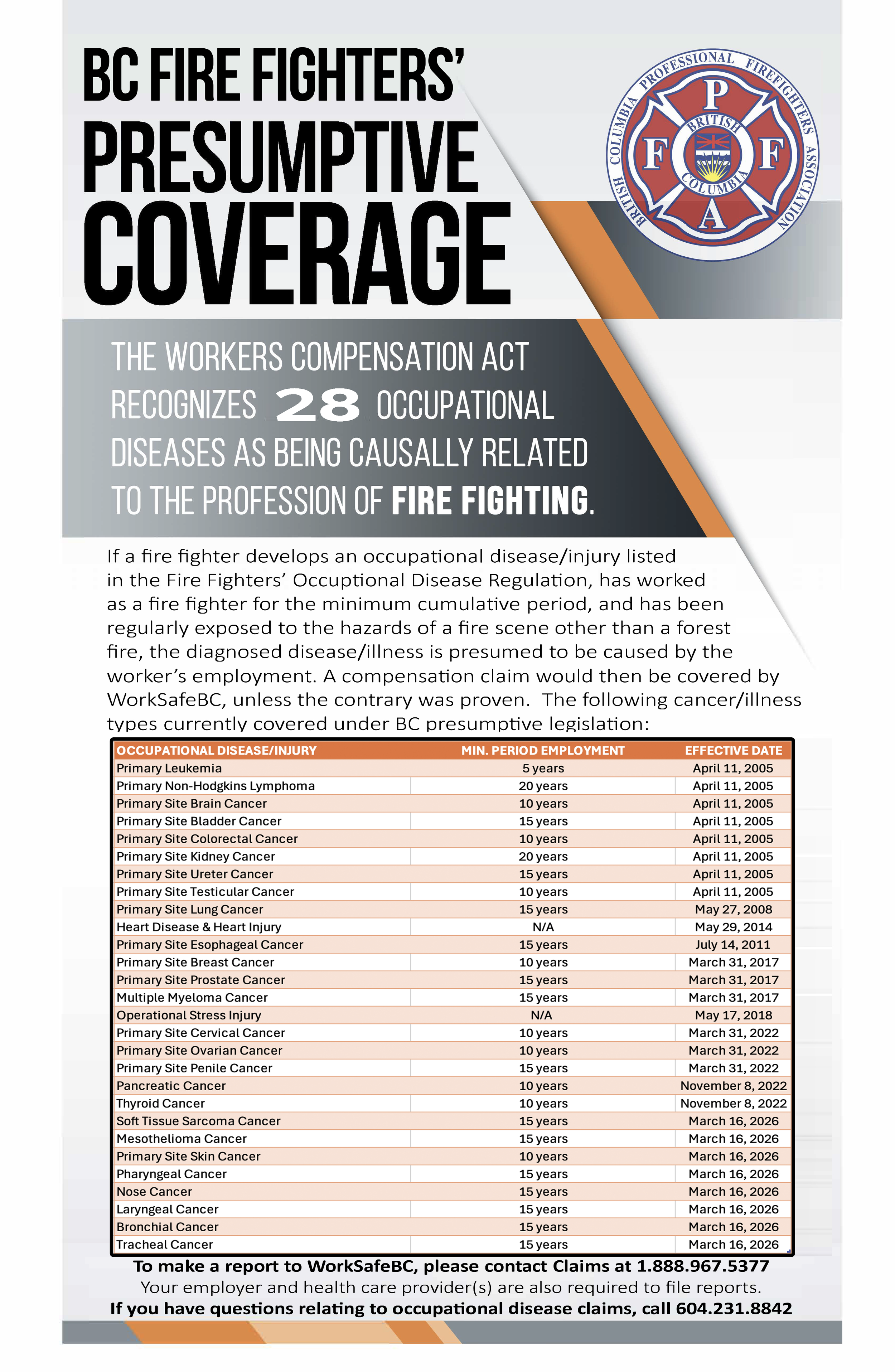
On behalf of the BCPFFA executive board, we are proud to share that as of March 16, 2026, eight additional cancers are officially recognized in British Columbia. This milestone expands our presumptive cancer coverage to 26, the highest in the country. Including Heart Injury and Operational Stress Injury. B.C. fire fighters now lead the nation with 28 total presumptive protections. These additions remove critical barriers for our members, shifting the burden of proof to ensure faster access to care. 

Correspondence Hon. Jennifer Whiteside, Minister of Labour 

Enclosed is a letter from the Hon. Minister Jennifer Whiteside addressed to the BCPFFA and Local leadership.

I want to highlight our strong collaboration with the Minister of Labour, Jennifer Whiteside, her ministry staff and the ongoing partnership with locals L256 and L1782, which are essential to fostering and maintaining healthy and productive relationships.

Amendments: (Effective March 16, 2026)

Worker’s Compensation Amendment Act: Fire Fighters’ Occupational Disease Regulation

  • Tracheal, Bronchial, Laryngeal, Nose and Pharyngeal (Respiratory System)

  • Skin Cancer, Soft Tissue Sarcoma, Mesothelioma (National Alignments)

  • In addition, the minimum service-year requirement for esophageal cancer has been successfully reduced from 20 years to 15 years.

MEMBER RESOURCES

  1. BCPFFA Presumptive Cancer Letter for Doctors

  2. BC Presumptive List WorkSafe Poster

  3. bcpffa.net/bc-presumptive-coverage webpage

  4. Hon. Jennifer Whiteside letter to BCPFFA leadership and membership 

  5. Order of the Lieutenant Governor in Council

We remain steadfast in our commitment to expanding presumptive protections. Our priorities include securing further coverage ie. all female reproductive and digestive systems, as well as reducing cumulative service periods based on the latest scientific data. We aim to achieve the bipartisan commitments: presumptive coverage for all cancer forms with minimal service requirements.

Parallel to these legislative efforts, we are dedicated to proactive health screening as a vital mission in the early prevention and detection of occupational disease.

On behalf of the executive board, thank you for your advocacy and for ensuring your members are aware of the update. We recognize the support of IAFF/BCPFFA local leadership, the Provincial Government, and Members of the Legislative Assembly for the dedicated advocacy and partnership that made these protections possible.

In Solidarity,

Todd Schierling

BCPFFA President


Historic Expansion of Occupational Cancer Coverage For BC Fire Fighters

BCPFFA Secures Historic Expansion of Occupational Cancer Coverage for Fire Fighters

FOR IMMEDIATE RELEASE: March 2, 2026

BRITISH COLUMBIA  – The Government of British Columbia, in partnership with the BC Professional Fire Fighters’ Association (BCPFFA), has strengthened health protections for fire fighters. Under the leadership of Premier David Eby and Minister of Labour Jennifer Whiteside, the province has added eight new types of cancer to the presumptive coverage list under the Workers’ Compensation Act and has met the national standard for coverage of esophageal cancer.


This announcement marks a significant advancement under the regulations of the Workers’ Compensation Act, establishing British Columbia as a leader in firefighter safety. The government has reduced the service-year requirement for esophageal cancer and shifted the legal burden of proof away from individuals, ensuring that all BC fire fighters, including structural and wildland personnel, receive the protection and support they deserve.

Those who risk their lives to protect us deserve to be protected, too. Fire Fighters often face hazardous situations, we’re making sure they have support when they need it the most.
— Premier David Eby

Eliminating the Burden of Proof: The 2026 Expansion Details

"Presumptive coverage" is a crucial legal tool in occupational health that simplifies the claims process for firefighters and their families. Historically, firefighters had to prove that their cancer was linked to workplace exposures, a challenging task due to the long latency of these diseases. The government has removed this burden, allowing WorkSafeBC to automatically consider these illnesses work-related for eligible individuals, which speeds up access to essential benefits and support. The 2026 expansion adds eight cancers to the presumptive list, reflecting the profession's specific risks.

  • Respiratory System:  Tracheal, Bronchial, Laryngeal, Nose, and Pharyngeal cancers.

  • Skin Cancer:  Recognizing high rates of toxin absorption through personal protective equipment (PPE).

  • Mesothelioma:  Addressing persistent, long-term risks associated with asbestos exposure.

  • Soft Tissue Sarcoma: Covering malignancies within the body's connective tissues. 

Amended the Esophageal cancercumulative service-yearrequirement from 20 to 15 years. This reduction mirrors the precedent set by Ontario and acknowledges the acute occupational hazards unique to firefighting. These legal protections are not merely policy shifts; they are built upon a foundation of rigorous scientific data.

The Scientific Mandate: Mortality Data and Global Classifications

The selection of specific cancers is a direct response to the "lethal realities of the modern fire environment." Firefighters today work in "toxic soup" environments where synthetic materials release harmful carcinogens absorbed through the skin and inhaled despite advanced PPE. In 2022, the International Agency for Research on Cancer (IARC) reclassified firefighting as a Group 1 Carcinogen, establishing a definitive link to cancer. (IARC Monographs Volume 132). This reclassification highlights the urgent need for legislative action, as occupational cancer accounts for 84.6% of line-of-duty deaths in the fire service from 2007 to 2021. (Samar Al-Hajj et al, 2025). By recognizing these illnesses as protected occupational injuries, the Province is addressing a clear danger with evidence-based actions.

British Columbia’s National Leadership in Fire Fighter Health

Since 2005, British Columbia has maintained a consistent trend of expanding protections to meet the evolving understanding of occupational risks. With the 2026 additions, B.C. provides the most comprehensive coverage in the country.

Provincial Comparison of Presumptive Cancer Types

Key legislative milestones:

  • 2005: Initial recognition of 8 cancers {Brain, Bladder, Colorectal, Kidney, Ureter, Primary non-Hodgkin's Lymphoma, and primary leukemia, Testicular};

  • 2008–2014: Addition of Lung, Esophageal, and Heart Disease;

  • 2017–2018: Addition of Breast, Prostate, Myeloma; recognition of Occupational Stress Injuries (OSI);

  • 2022: Cervical, Ovarian, Penile, Pancreatic, Thyroid and reductions in cumulative periods in Testicular, Colorectal, Esophageal;

  • 2026: Addition of 8 new cancers and further reduction of the cumulative risk for Esophageal

While these compensation frameworks are vital, the BCPFFA’s vision is to look to the future, defined by prevention.

Leadership Insights and Interjurisdictional Strategic Alignment

The 2026 expansion serves as a blueprint for an effective labour-government partnership. The Ministry of Labour, under Minister Jennifer Whiteside, has facilitated this science-based response as a proactive measure of provincial leadership. 

Expanding the list of presumptive cancers and lowering the cumulative service for esophageal cancer acknowledges the risks we face on the job. It also underscores the Provincial Government’s commitment to the health and safety of all fire fighters. This is the strongest set of protections in the country, and the BCPFFA will continue to advocate for the health, safety, and support for all members.
— Todd Schierling, President, BCPFFA

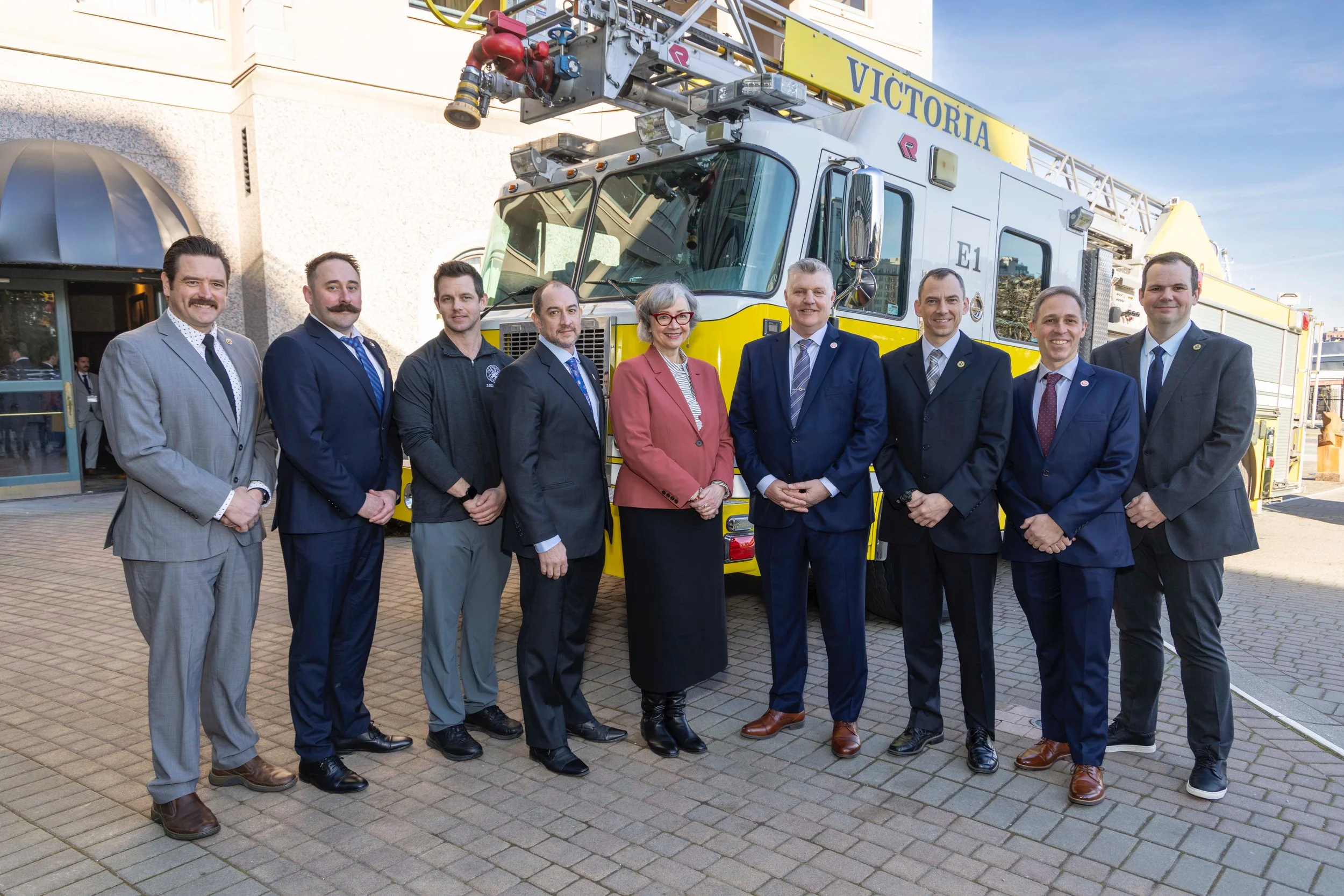
Hon. Minister Whiteside with BCPFFA President Todd Schierling and the leadership of Local 1782 Coquitlam (left) and Local 256 New Westminster (right)

Fire Fighters put themselves in difficult and sometimes hazardous situations to save people and property. These updates help ensure that firefighters who develop
certain cancers have timely access to workers’ compensation benefits and supports during a time when they
need it most.
— Hon. Minister Jennifer Whiteside

The Path Forward: A Collaborative for Prevention and Early Detection

Provincial momentum has led to strategic alignment at the federal level. Schierling highlights a strong message from Minister of Labour, Hon. Jennifer Whiteside, to the Federal Minister of Health and Minister of Industry. In late 2025, Minister Whiteside discussed an "automatic exposure registry" with MP Mélanie Joly, aimed at documenting real-time carcinogenic exposure through fire incident reporting. Minister Joly emphasized B.C.’s leadership is "critical to the success of the registry," positioning the province as a key architect for a future national occupational health data framework.

“The primary objective is to foster a proactive approach to the prevention of illness among all fire fighters, encompassing structural, wildland, and Indigenous categories. This comprehensive strategy underscores the provincial government’s steadfast commitment to those who safeguard the public, ensuring that they return home in good health at the conclusion of their duties.” 
— BCPFFA President Todd Schierling

The next frontier in fire fighter safety is the shift from "coverage after diagnosis" to the active "avoidance of illness."  The BCPFFA’s vision is to work with the Government of British Columbia to support a path forward of collaboration with stakeholders to implement advanced decontamination protocols and standardized health screenings across the province. The proposed collaboration would bring together: The Ministries of Health, Labour, Public Safety, and the Office of the Fire Commissioner, BC Cancer Research, Doctors of BC, BC General Employees Union, BC Wildland Fire Fighters Service, The Fire Chiefs’ Association of BC, Greater Vancouver Fire Chiefs’ Association, The Union of BC Municipalities, Indigenous groups, Health Economists, Statistics Canada, BC Municipal Safety Association and WorkSafeBC. 

On behalf of the BCPFFA, “We thank the Provincial Government and all Members of the Legislative Assembly for their continued support of fire fighters and all first responders.. We are also thankful to the IAFF Health and Safety Division under the leadership of General President Ed Kelly for their guidance and support of evidence based data.” — BCPFFA President Todd Schierling

Relevant Information

References

Media Contact

Jane Spitz, Communications Manager

e:communications@bcpffa.org

c: 604.916.8499

ABOUT THE BCPFFA 

The BC Professional Fire Fighters' Association is a non-profit organization established in 1929 that represents over 5,000 professional firefighters, dispatchers, and support members across 56 local unions in British Columbia and the Yukon. As an affiliate of the International Association of Fire Fighters, the association provides advocacy, training, and support for its members, with a strong focus on health, safety, and legislative lobbying.

- 30 -

Dr. Dan Whu, MD, MPH, FACPM, Chief Medical Officer for the International Association of Fire Fighters (IAFF), stated:

“We, at the IAFF, congratulate the British Columbia Professional Fire Fighters Association (BCPFFA) and thank Premier David Eby and Minister of Labour Jennifer Whiteside for the advancement of BC presumptive legislation that will benefit all BC fire fighters and shall serve as a model to be followed for all other Canadian Provinces and Territories. Unfortunately, BC’s decision to add 8 cancers to their existing presumptive legislation was not a difficult one, given the myriad of scientific and medical research available on occupationally-acquired cancers in fire fighters, which occur as a direct consequence of all the constantly recurring and high-intensity toxic exposures fire fighters encounter, both at the scene of fires and other emergencies, as well as during the routine performance of their duties. In fact, the International Agency for Research in Cancer determined in 2022 that the epigenetic evidence available at that time supported an association between firefighting exposures and general carcinogenesis. Based on this grim fact, even approvals for all cancers to be covered under presumptive legislations across Canada and the U.S. would be in-line with the current state of science. Under the leadership of IAFF General President Edward Kelly, the IAFF is honored to have assisted the BCPFFA by sharing the available medical and scientific evidence demonstrating the carcinogenicity of the occupation of fire fighter that they utilized during the championing of this effort.”

- Dr. Dan Whu, MD, MPH, FACPM, Chief Medical Officer for IAFF

Executive Summary: Occupational Cancer Trends Among Canadian Firefighters: Implications for Health, Safety, and Governance

Occupational Cancer Trends Among Canadian Firefighters: Implications for Health, Safety, and Governance

Executive Summary Report 

Introduction

This article is based on a peer-reviewed publication in the journal Injury Epidemiology, published online by Springer Nature on December 17, 2025. The study provides the most comprehensive national analysis to date of firefighter injury and fatality claims in Canada between 2007 and 2021.

Canadian firefighters know the risks of the job extend far beyond the fireground. Recent national data on injury and fatality claims show that cancer, traumatic injuries, and mental health disorders are reshaping the health profile of our profession. Between 2007 and 2021, more than 29,000 accepted claims were reported across Canada, underscoring firefighting as one of the most hazardous occupations in the country.

The Reality of Injury and Fatality in Canada’s Fire Service

Between 2007 and 2021, Canadian firefighters submitted 1,509 fatality claims and 27,990 time-loss injury claims.

Fatalities were dominated by cancer, accounting for 84.6% of firefighter deaths, with a fatality rate of nearly 994 per 100,000 firefighters per year. Cardiovascular disease (CVD) and traumatic incidents followed as secondary contributors.

Time-loss injuries were overwhelmingly traumatic in nature, representing 80.6% of claims at a rate of 17,859 per 100,000 firefighters per year. Musculoskeletal strains, sprains, and overexertion injuries were particularly prevalent.

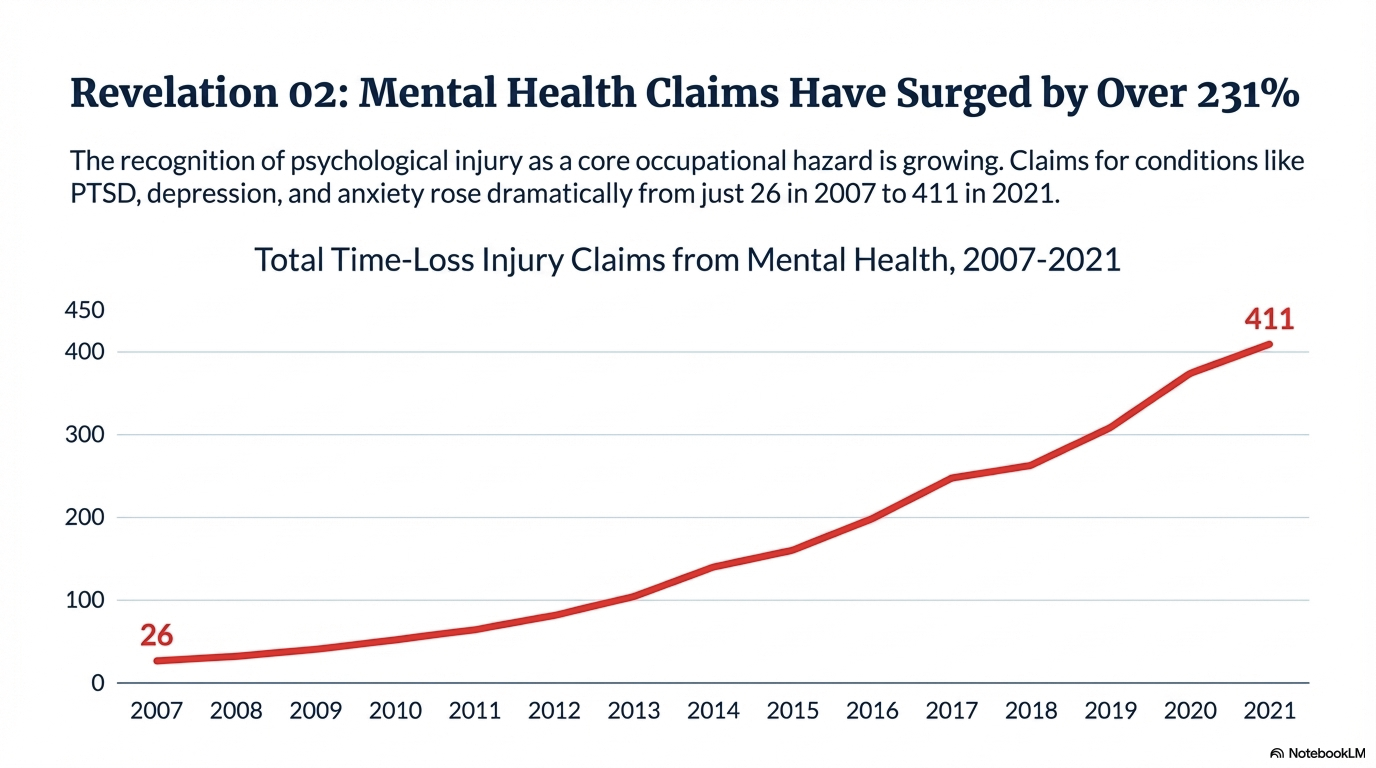
Mental health claims rose sharply, increasing by 231% over the study period, reflecting the growing toll of post-traumatic stress disorder (PTSD), depression, and burnout.

These findings confirm what many in the fire service already know: the health reality of firefighting is shifting from acute trauma toward chronic disease and psychological stress.

Demographic and Provincial Trends

Fatality claims were most common among firefighters aged 65 and over, reflecting the long-term latency of cancer and cardiovascular disease. Time-loss injuries peaked among those aged 30–49, the prime working years of the profession.

Men accounted for 99.4% of fatality claims and 92.2% of injury claims, reflecting the male-dominated composition of Canada’s fire service.

Ontario reported the highest incidence, with 47.3% of fatalities and 30.7% of injuries, followed by Quebec, British Columbia, and Alberta. These provinces represent the largest firefighter populations and the most complex fire environments, from dense urban centres to expansive wildland interfaces.

Cancer: The Leading Cause of Firefighter Fatalities

Cancer continues to stand out as the most significant occupational health threat for Canadian firefighters. More than four out of five fatality claims between 2007 and 2021 were cancer-related. This reflects decades of exposure to toxic combustion products, flame retardants, and hazardous chemicals embedded in firefighting gear.

The latency of cancer means that many firefighters only experience its impact late in their careers, with the majority of fatality claims occurring among those aged 65 and older. Yet the data also show that 14 firefighters aged 25–29 died from occupational causes during the study period, representing nearly 1% of all fatalities. This finding underscores that cancer and other occupational diseases are not confined to retirement years — they can affect firefighters much earlier in their careers.

What makes this picture even more concerning is evidence from prior research showing that only 14% of firefighters had undergone cancer screening in the three years before the study cohort was assessed. This statistic underscores a critical gap: while firefighters face elevated exposure risks, they are not consistently accessing preventive health monitoring. The result is late detection, poorer outcomes, and higher fatality rates.

For the firefighting community, the message is clear. Cancer prevention is not only about reducing exposure on the fireground through decontamination protocols and safer gear — it is also about embedding routine screening and health surveillance from the earliest stages of a firefighter’s career. Screening should be treated with the same seriousness as fitness testing or PPE checks. Administration  and unions have a role to play in advocating for funded, accessible screening programs, while departments can lead education campaigns that normalize early detection.

By combining exposure reduction with proactive health monitoring, the fire service can begin to shift the trajectory of cancer outcomes. This is not simply a medical issue — it is a governance and operational priority that directly affects firefighter longevity, workforce sustainability, and community trust.

Cardiovascular Disease: A Silent Killer

Sudden cardiac arrest remains a leading cause of firefighter fatalities during emergency response in North America. Canadian data mirror this global trend.

Firefighters are significantly more likely to die from CVD during emergency response compared to non-emergency duties. Risk factors include obesity, hypertension, diabetes, and musculoskeletal disorders—all prevalent within the firefighter population.

Operational planning must therefore integrate cardiovascular screening, fitness programs, and fatigue management policies into fire service governance. Addressing cardiovascular risk is as much about organizational culture as it is about individual health.

Mental Health: The Rising Tide

The sharp increase in mental health claims—rising from 26 in 2007 to 411 in 2021—signals a cultural and operational shift. PTSD, depression, anxiety, and substance abuse are increasingly recognized as occupational hazards.

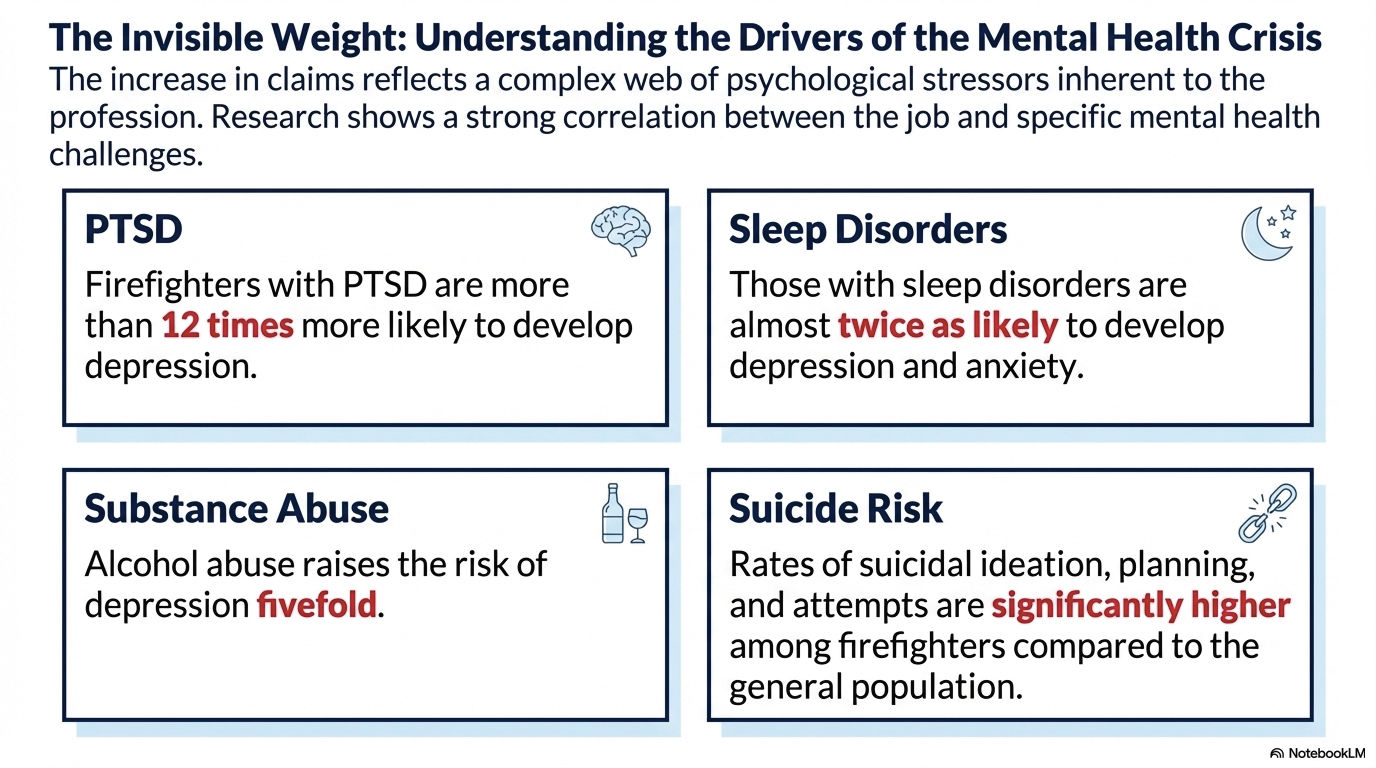
Firefighters with sleep disorders are almost twice as likely to develop depression and anxiety. PTSD increases the odds of depression more than twelvefold, while alcohol abuse raises risk fivefold. Rates of suicidal ideation and attempts are significantly higher among firefighters compared to the general population.

For the firefighting community, this trend demands comprehensive mental health strategies, including peer support programs, confidential counselling, and proactive monitoring. The stigma surrounding psychological injury must be dismantled to ensure firefighters receive timely care.

Operational and Governance Implications

The epidemiological findings carry direct implications for Canadian fire governance and administrative  decision-making.

Cancer and cardiovascular screening protocols, integrated mental health assessments, musculoskeletal injury prevention, enhanced decontamination protocols, and harmonized compensation processes are all critical steps.

Building Sustainable Firefighter Health Programs

The findings from 2007–2021 highlight the urgent need for sustainable, evidence-based health programs that empower firefighters and reassure administration of long-term governance accountability.

Community empowerment, national standards, and administrative engagement are all critical. By reframing firefighter health as a governance priority, administration can ensure that occupational risks are mitigated, workforce sustainability is preserved, and public trust in fire services is strengthened.

Strategic Approaches for Firefighter Health and Safety

For the firefighting community, advancing towards a healthier future demands a commitment to evidence-based governance, the implementation of proactive health surveillance, and the establishment of sustainable safety programs. These strategies should be grounded in ongoing research and data to ensure that interventions remain relevant and effective over time.

Investing in firefighter health is not only a matter of supporting those who serve but also a strategic decision for the long-term resilience of Canadian fire services. By prioritizing these investments today, Canada stands to cultivate a fire service that is robust, adaptable, and fully capable of safeguarding communities in the years ahead.

Furthermore, those who finance and support these programs will ultimately realize substantial benefits. Reduced costs associated with preventable injuries, illnesses, and other health-related setbacks will result in a more sustainable allocation of resources, ensuring that both operational efficiency and fiscal responsibility are achieved.

Conclusion

The evidence is clear: Canadian firefighters face a dual challenge of acute traumatic injury and chronic disease, with cancer, cardiovascular illness, and mental health disorders leading the charge. These risks translate into thousands of claims, hundreds of fatalities, and immeasurable impacts on families, communities, and fire services. 

Len Garis is Fire Chief (ret) for the city of Surrey, B.C., Research Associate – University of the Fraser Valley, associate scientist emeritus with the B.C. Injury Research and Prevention Unit. Contact him at lwgaris@outlook.com

Todd Schierling is the president of the BC Professional Firefighters Association, a captain with the Surrey Fire Services and an IAFF 6th District field service representative. Contact him at president@bcpffa.org.

Reference

Al-Hajj, S., Thomas, L., Garis, L., El-Asmar, K., El-Hajj, F., & Pike, I. (2025). Occupational injury among firefighters in Canada: a trends analysis of fatality and time-loss injury claims (2007–2021). Injury Epidemiology, 12:85. Published online December 17, 2025. Springer Nature. 

Review the full article here https://doi.org/10.1186/s40621-025-00639-0

Executive Summary: Evaluation of the First Responder Resiliency Program (FRRP)

Executive Summary Report

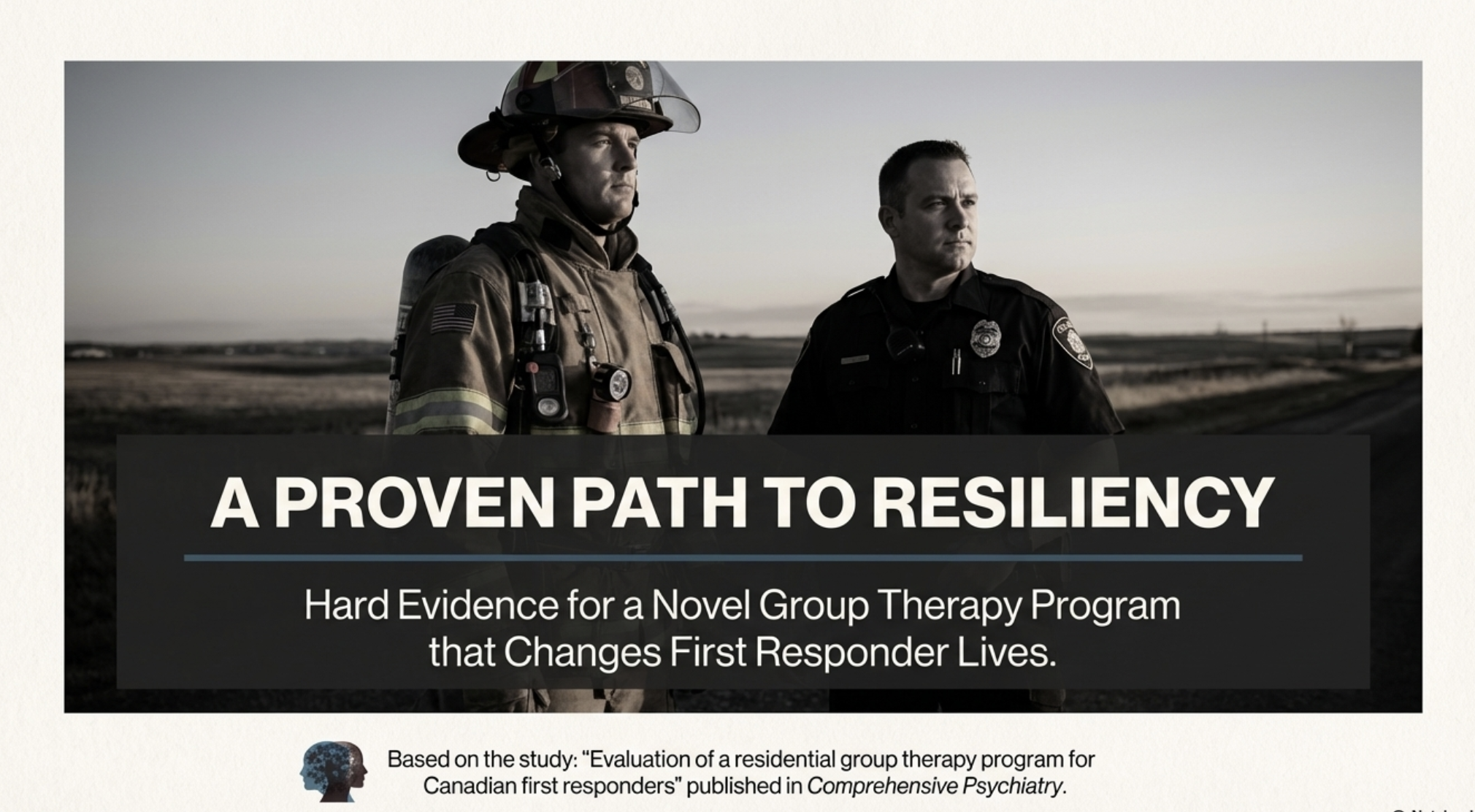
This report summarizes a clinical study published in Comprehensive Psychiatry evaluating the First Responder Resiliency Program (FRRP). The study monitored 220 Canadian first responders—including 114 firefighters—to determine the program’s efficacy in mitigating occupational stress and enhancing quality of life.

Background and Evolution

The FRRP’s initial implementation and research were made possible by a two-year grant from Movember. This funding covered 28 sessions conducted between 2021 and 2024.

Following the successful grant period, the program transitioned to a sustainable user-pay model. It is now collectively administered by:

  • BC Professional Fire Fighters’ Association (BCPFFA)

  • BC Police Association

  • Blueprint.ngo

Participation included IAFF members from across Canada.

Key Study Results

The evaluation revealed significant, enduring improvements across all primary psychological markers, with data collected at baseline, two weeks post-program, and at a six-month follow-up.


  • Clinically Significant Symptom Reduction: Participants showed "large" to "medium-large" decreases in symptoms of Major Depressive Disorder (MDD), Generalized Anxiety Disorder (GAD), and PTSD.

  • Successful Return to Work: 60% of participants who were on medical leave at the start of the program successfully returned to active duty following the intervention.

  • Enhanced Quality of Life: Members reported substantial gains in life satisfaction and their ability to navigate social and professional roles.

  • Long-Term Stability: Unlike many short-term mental health interventions, the positive gains recorded immediately after the program remained stable at the six-month mark.


Social Return on Investment (SROI)

The FRRP demonstrated exceptional value relative to its funding. According to the University of Canberra FRRP Evaluation Report (2024)

  • Direct Impact: For every $1 USD invested by Movember, the program generated $5.48 USD in social value.

  • Efficiency: This represents a 448% social return, which remains high even when accounting for additional in-kind and operational costs.

Source: BluePrint FRRP Summary Participant Outcomes & University of Canberra, FRRP Evaluation Report 2024

Conclusion: A Proven Framework for Resiliency

The Movember-funded grant period provided the rigorous clinical environment necessary to confirm a vital truth: the FRRP works. By delivering measurable, long-term relief from occupational stress and facilitating a successful return to work for a majority of participants, the program has moved beyond a "pilot" phase and is now a proven clinical standard.

In addition, the unanimous adoption of NR12 Resolution: Health and Wellbeing of BC’s Public Safety Personnel (submitted by North Vancouver City) at the Union of BC Municipalities in September 2025 underscores the urgent need for this intervention. With local governments now calling on the Provincial Government to commit $3M in funding, the evidence is clear that the FRRP is not just a health necessity, but a high-value investment in the safety of our communities.

As we transition to our current administrative model, we urge our affiliates to leverage these findings. This data provides the foundation to advocate for the permanent integration of the FRRP into our members' health and wellness benefits, ensuring that those who protect our province have the evidence-based support they deserve.

Dr. Duncan Shields, Adjunct Professor - Faculty of Medicine, University of British Columbia, Blueprint - Military and First Responder Resiliency Projects  Co-founder, Blueprint., Dr. Duncan Shields, R.Psych.

Todd Schierling, President, BC Professional Fire Fighters’ Association; Captain with Surrey Fire Services; IAFF 6th District Representative.


Reference: 

Duncan M Shields, Jan Klimas, Theo Niyonsenga, Kevin Lutz, Aynsley J. Wong, David Kuhl, Faculty of Medicine, University of British Columbia, 3rd floor David Strangway Building, 5950 University Blvd, Vancouver, BC V6T 2A1, Canada Received 30 December 2024, Revised 30 October 2025, Accepted 5 December 2025, Available online 8 December 2025, Version of Record 12 December 2025.

Review Full Article here: sciencedirect.com/science/article/pii/S0010440X25000781 


About FRRP

Since 2017, with the BCPFFA, Blueprint has delivered FRRP to active duty fire fighters across BC and beyond; in 2019, the program was modified in collaboration with the BCPA to deliver resiliency education to law enforcement officers. Together, these organizations represent over 10,000 first responders across the province of BC, and comprise the program’s participant pool. To date, almost 500 first responders have participated in the program. The program is an evidence-informed model created through a unique collaboration between first responder participants, the BCPFFA, BCPA, and Drs. Duncan Shields and David Kuhl from The Blueprint at UBC’s Faculty of Medicine.


UBCM 2025 adopts Resolutions Supporting First Responders

FOR IMMEDIATE RELEASE:

BCPFFA Celebrates Support from Local Government at UBCM 2025 with Endorsements to Enhance First Responder Safety and Protect Public from Building Code Risk 🚒

Thanks to North Vancovuer City’s Councillor Jessica Mcllroy who moved resolution NR12: Health and Wellbeing of BC's Public Safety Personnel. Unanimously supported.

Vancouver, BC – October 13, 2025 – The British Columbia Professional Fire Fighters' Association (BCPFFA) is celebrating the endorsement of two critical public safety resolutions at the 2025 Union of BC Municipalities (UBCM) convention, marking a unified call from local governments for urgent provincial action.

The BCPFFA extends its sincere appreciation to the City of North Vancouver for submitting NR12: Health and Wellbeing of BC's Public Safety Personnel, and to the City of Burnaby for championing NR42: Request to Repeal the Single Exit Stairway Building Code.

Action on First Responder Mental Health (NR12)

NR12 Health and Wellbeing of BC’s Public Safety Personnel Endorsed

Resolution NR12 addresses the escalating crisis of mental health among public safety personnel. Psychological-only injury workplace claims have increased five-fold in British Columbia since 2018, with fire and police personnel suffering from occupational stress injuries at rates four times that of the general population.

The resolution, which the BCPFFA was a key partner in supporting BluePrint, successfully mandates UBCM to ask the Province to take the following steps:

  • Provide two years of funding for the BC First Responder Resiliency Program (FRRP) to ensure continuous support while a longer-term funding model is developed4. The FRRP, which has served over 500 first responders across BC since 2019, has demonstrated positive, evidence-based outcomes lasting at least six months. (Source: BluePrint, UBC)

  • Ask the Ministries of Health, Labour, and Public Safety and Solicitor General to collaborate with FRRP interest holder organizations to develop mental health and wellness policies, regulations, and funding mechanisms for the program’s long-term viability and expansion across the province.


NR12 Health and Wellbeing of BC’s Public Safety Personnel Endorsed

Suspending the Single-Exit Stairway Building Code (NR42)

Resolution NR42 submitted by the City of Burnaby demands immediate suspension of a controversial change to the British Columbia Building Code (BCBC), effective August 27, 2024, which permits the construction of residential multi-family buildings up to six storeys with a single exit stairway under certain conditions.

The BCPFFA, alongside other groups like the Fire Chiefs Association of BC (FCABC) and the BC Police Association (BCPA), has publicly voiced opposition, citing elevated risks to occupant and first responder safety. The resolution urges UBCM to call on the Province to:

  • Suspend the implementation of the single exit stairway provisions in the BC Building Code.

  • Conduct a comprehensive safety review that includes consultation with UBCM, emergency service stakeholders, and a reference to BC-specific data.

The resolution's background context highlights the dangers: single-egress designs reduce redundancy in emergency evacuation routes, and data shows that 68 percent of residential fire deaths result from smoke inhalation, which can rapidly compromise a single stairwell exit. The increasing risk of lithium-ion battery fires adds another layer of urgency. (Source Len Gairs, University of Fraser Valley, 2024)

The Path Forward: Activating the Direction of Local Government

Todd Schierling, President of the BCPFFA, stated: "The collective endorsement from local governments on both NR12 and NR42 is a clear and powerful mandate for change. We thank North Vancouver City and Burnaby for leading these critical public safety efforts. Now, we need to see it through and work with the provincial government to activate the direction of the municipalities. The health and safety of our first responders, and the very safety standards governing the homes of all BC residents, depend on swift action from the Province on these endorsed resolutions."

About the British Columbia Professional Fire Fighters' Association

The BCPFFA is committed to working with all provincial ministries to ensure these essential changes are translated from municipal resolution into decisive provincial policy and action.

The British Columbia Professional Fire Fighters' Association (BCPFFA) is the provincial voice for the International Association of Fire Fighters (IAFF) in British Columbia. Affiliated with the IAFF since 1929, the BCPFFA is dedicated to protecting the health, safety, and working conditions of its members and ensuring the highest level of public safety for all citizens of British Columbia.

-30-


Experience the magic of Bright Nights at the Noël Holiday Light Festival in Surrey

For Immediate Release

Experience the magic of Bright Nights, now happening at the Noël Holiday Light Festival in Surrey

Surrey B.C. - The BC Professional Fire Fighters’ Burn Fund is proud to announce the return of the 28th annual Bright Nights light display to its roots in Surrey. This year, our beloved light display will be a featured part of the second annual Noël Holiday Light Festival, which runs from November 28 to December 28 at the Cloverdale Fairgrounds. This homecoming is a special moment, and we’re excited to bring this holiday tradition back to the community where it all began.

The tradition of Bright Nights started in the mid-1980s with two generous Surrey residents, Bob Wingfield and Marg Barrett. With help from Surrey firefighters, they created an incredible light display at their Newton home that drew thousands of visitors and raised funds for burn survivors at Vancouver General Hospital. In 1997, Bob and Marg donated their lights to the Burn Fund, and we created what is now known as Bright Nights, which went on to bring holiday magic to Vancouver’s Stanley Park for more than 25 years.


This year’s event is made possible by the incredible support of the more than 800 firefighters who volunteer thousands of hours to create this magical display. Their dedication makes Bright Nights the single largest annual fundraiser for the Burn Fund, helping us continue our vital work for burn survivors across the province. A portion of the proceeds from the Noël Holiday Light Festival will also be donated to the Burn Fund, ensuring that we can provide essential services to those in need.

At Noël Surrey, guests can explore the stunning Bright Nights display, which features nearly three million lights along an accessible path around the pond at the Bill Reid Millennium Amphitheatre. We're thrilled to be part of an event that offers so much, including a massive indoor Noël Village with a Santa's workshop, live music, and a Christmas market.

"President of the BC Professional Fire Fighters’ Burn Fund, I’m excited to see Bright Nights light up the Noël Holiday Light Festival in Surrey,” said Todd Schierling. “We’re grateful for the opportunity to bring this tradition to a wonderful new setting at the Cloverdale Fairgrounds, and to continue creating a magical holiday experience that supports burn survivors across the province.”

In keeping with our long-standing tradition, we will be accepting donations at the event to support crucial programs for burn survivors, including Home Away at the Burn Fund Centre. This facility provides a safe and welcoming place for survivors and their families while they undergo life-saving treatment in Vancouver. Every donation helps ensure that survivors get the support they need, especially during the holiday season.

President Schierling stated, “I really want thank Mayor Brenda Locke and the Noël Surrey organizers for their unwavering support and for including the Burn Fund in their festival. Your commitment to the Burn Fund and this incredible event truly makes a profound difference. He goes on to say, “the support from our 56 BCPFFA affiliate locals is essential to the success of the Bright Nights. I want to particularly thank the Surrey Fire Fighters’ Charitable Society for allowing the BCPFF Burn Fund to operate in their jurisdiction - we could not do this without their support.”

For more information and to purchase tickets, visit noelfestival.com. We look forward to seeing you there to celebrate the holiday season and support a cause that is close to our hearts.


About the BC Professional Fire Fighters’ Burn Fund

From rescue to recovery, firefighters have answered the call to support burn survivors across B.C. and the Yukon since 1978. The Burn Fund is dedicated to assisting burn survivors throughout their recovery every step of the way. The Burn Fund empowers survivors through programs and retreats, provides accommodations to burn survivors and their families, enhances medical care at BC’s trauma hospitals, and fills the gap with vital resources and treatment.

About Noël Holiday Light Festival

The Noël Holiday Light Festival is Surrey’s signature holiday celebration, returning for its 2nd year from Nov. 28 to Dec. 28, 2025 at the Cloverdale Fairgrounds. This indoor-outdoor festival transforms the fairgrounds into a dazzling winter wonderland with millions of lights, live entertainment, a Christmas market, complimentary rides, free kids' activities, and seasonal food & drink. Noël creates a festive atmosphere perfect for families, friends, and all holiday enthusiasts. 

Media enquiries 

Jeff Sauvé

Executive Director

BC Professional Fire Fighters’ Burn Fund

jeff@burnfund.org

(778) 228-9564

Event information 

Mary Rukavina

Manager, Special Events and Filming

Parks, Recreation & Culture  

mrukavina@surrey.ca  

(604) 591-4598

-30-

Occupants & Firefighters at Risk

NR42 Request to Repeal the Single Exit Stairway Building Code

Fire Service associations across British Columbia, Canada and USA are requesting that these changes be reversed or paused, and we strongly recommend that this be deferred to the National Building Code revision process with the involvement of the National Research Council.

We urge the public to take immediate action. What can you do ?

  1. Contact your Mayor / Council support UBCM Resolution at UBCM Victoria September 22-26, 2025: NR42 Request to Repeal the Single Exit Stairway Building Code submitted by City of Burnaby.

  2. Contact your elected officials—including Premier of BC, Minister of Housing, Minister of Public Safety and Minister of Housing, and your local MLA—to voice your concern over the unsafe building code for both occupants and your fire fighters.